


Inspired by Vanessa Chang, Curator & Mentor, at CODAME ART+TECH
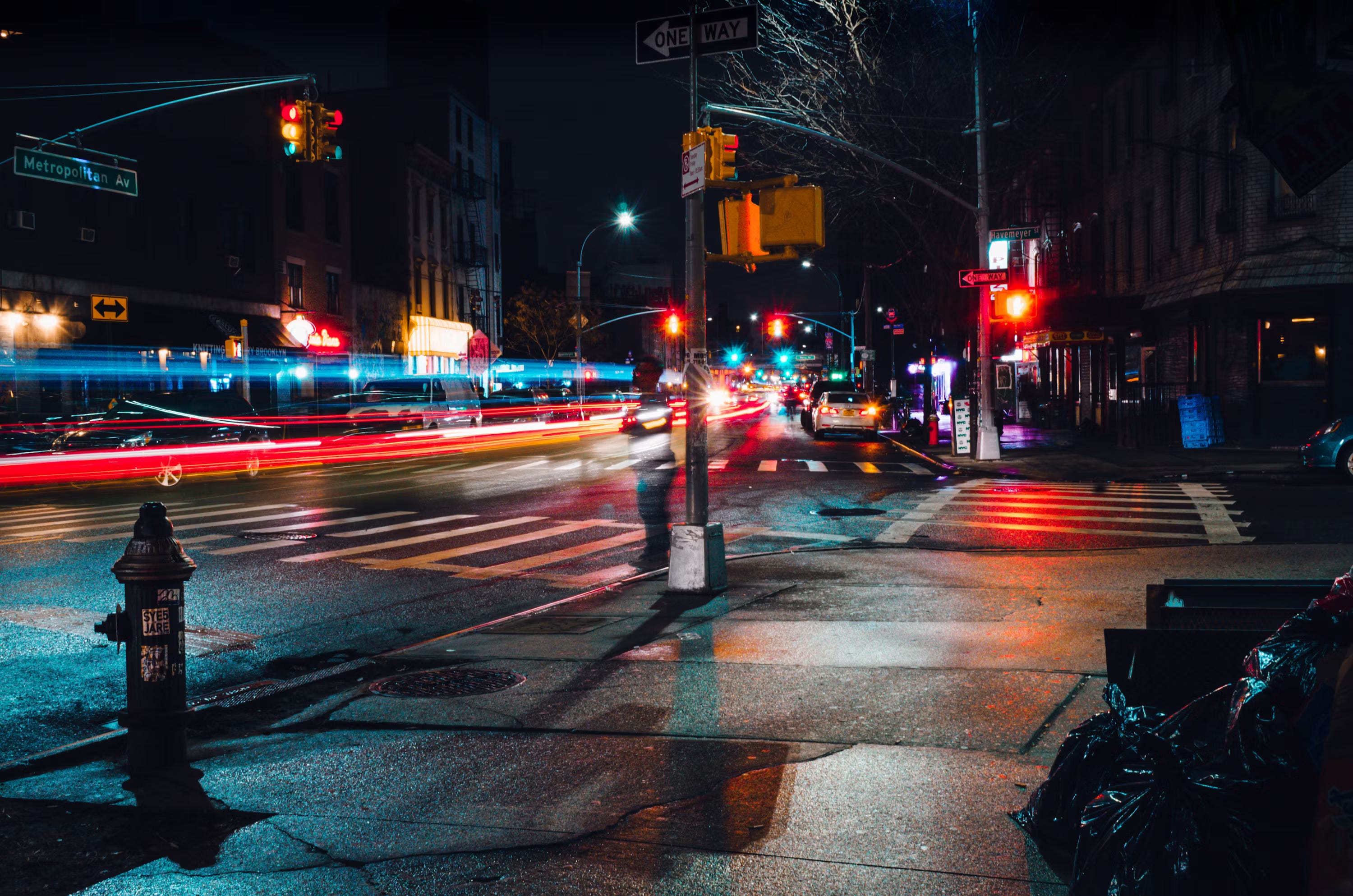
The city has learned to predict you.
Not metaphorically. Physically.
A Waymo glides past a man who has stopped to look up. At what, nobody knows. The car continues. The man stays. That gap is where Vanessa Chang’s new essay begins.
Baudelaire had a name for the kind of person who walks without destination, noticing everything. The flâneur. What Vanessa wants to know is what happened to that person — and to that city — when the streets got a nervous system.
The essay goes places we didn’t expect — including protesters who use orange traffic cones to freeze autonomous vehicles in place, and a turn at the end toward what these same cars might actually open up for people who experience cities differently. Vanessa finds things in this material that we hadn’t thought to look for.
The New Human is CODAME’s festival theme this year, and it keeps asking exactly this: what does it mean to be human in a world shaped by systems that don’t share our reasons for moving through it? Vanessa’s essay is one of the sharpest things we’ve read on the question. Not because it resolves anything. Because it knows exactly where to stand and look.
Published in Pittsburgh Review of Literature. Read it slowly.
And maybe take the long way home after.
From the essay
Algorithms might seem intangible, but they have palpable consequences for human bodies moving through the built environment. Unlike a traffic light — which treats every pedestrian identically, indifferent to identity or history — an algorithm changes its instruction per individual. It knows who you are. It routes accordingly.
This is not neutrality. It is a new kind of choreography, one in which the city’s directions are whispered differently into every ear, and the commons of shared navigation quietly dissolves. The flâneur required a city legible to anyone willing to walk slowly enough to read it. That city is being rewritten.
The full essay moves through Rimini Protokoll's street theater, the protesters using orange cones to strand autonomous vehicles, and the unexpected possibility that accessibility features in these same cars might produce the most novel experience of a city anyone has had in years.
Originally published September 4, 2026 in Pittsburgh Review of Literature
About Vanessa Chang — Vanessa is a mentor, curator, and cultural critic whose work centers on art, technology, and the built environment. She has been part of the CODAME community since 2019, collaborating on programs that live at the intersection of creative practice and emerging systems. Her current focus — what it means to be a New Human navigating cities increasingly shaped by machine intelligence — runs directly through this essay and the broader questions CODAME keeps returning to.
View Vanessa’s profile on CODAME →